
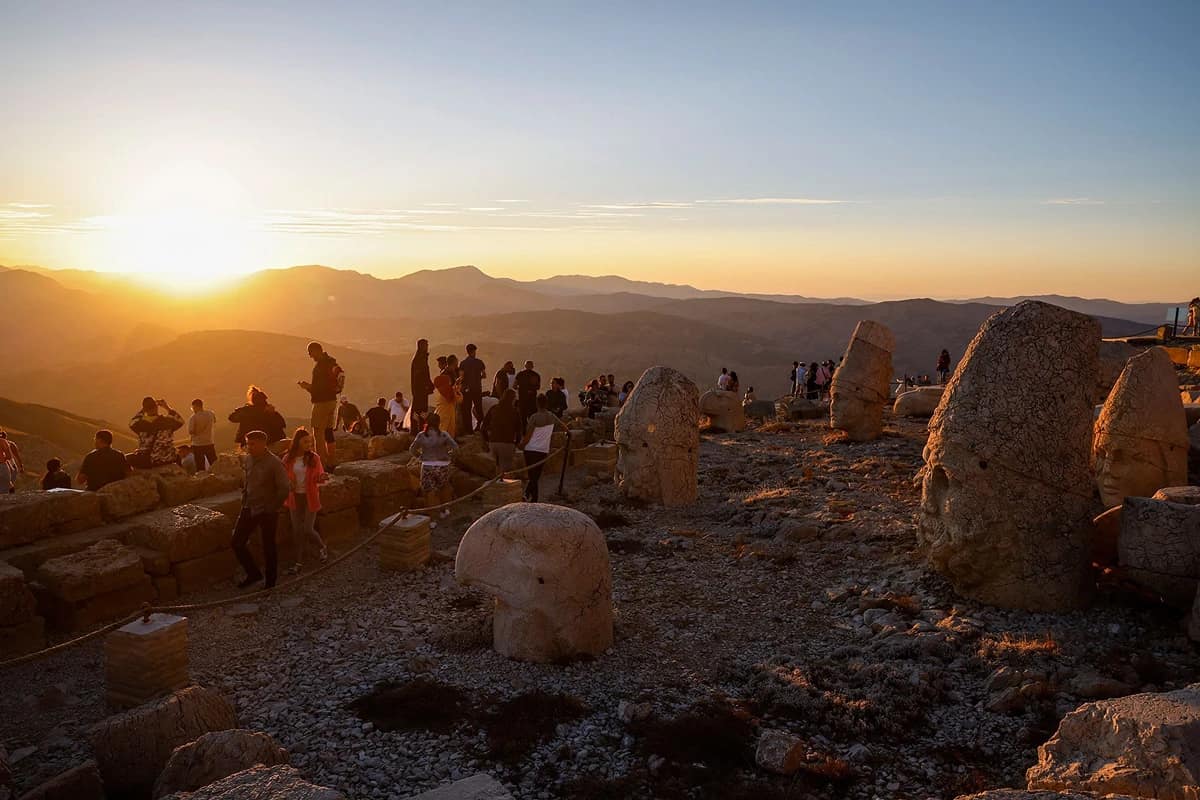
Almost nobody comes to Mount Nemrut for the middle of the day. The entire visit is built around a single hour, either side of darkness, when low sun slides across a line of enormous stone faces lying on a remote summit in southeast Türkiye. These are the toppled gods of a forgotten kingdom, carved more than two thousand years ago, and seeing them in that brief golden light is the reason travelers make the long journey out here at all.
Which means planning a Nemrut trip is really about three questions: sunrise or sunset, which town to launch from, and what else to weave into the drive. Sort those out and the rest falls into place. Here's how we'd map it.
A king, a mountain, and a row of fallen gods
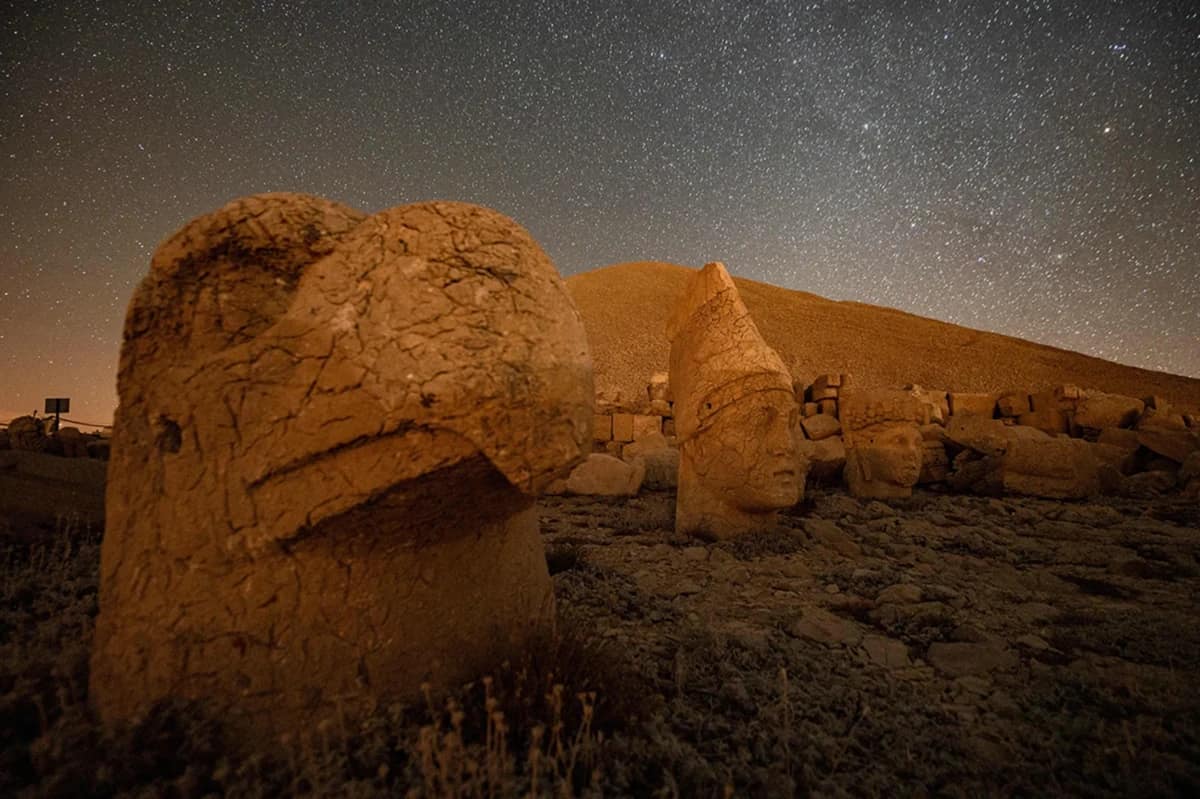
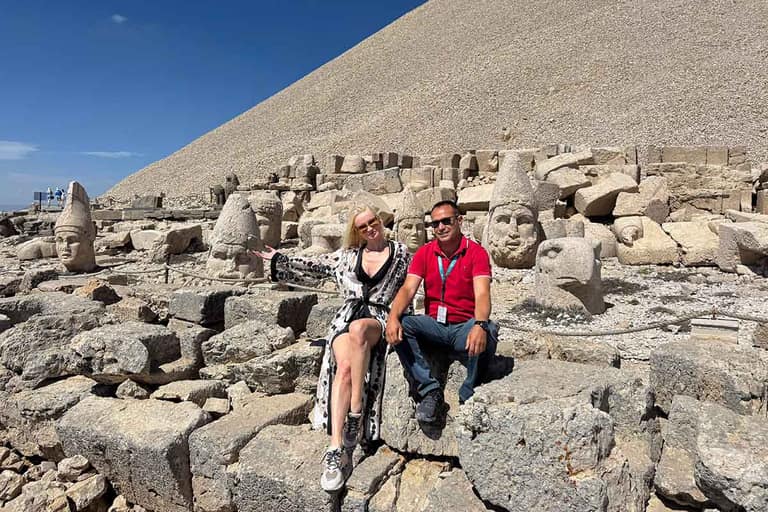
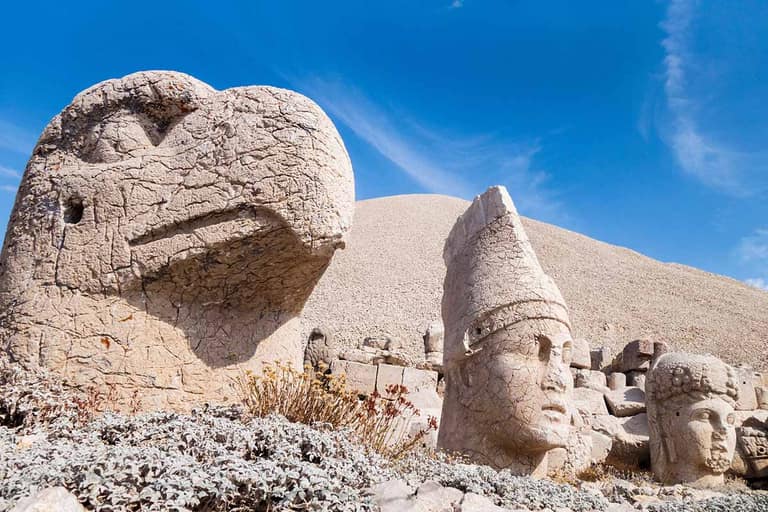
The story starts around 62 BC with Antiochus I, ruler of Commagene, a modest kingdom pinned between the expanding powers of Rome and Persia. Wanting to be remembered as something more than a minor monarch, he chose the highest peak he commanded, 2,134 metres up, and turned it into a sanctuary for his own tomb. Around it he raised a ring of seated statues eight to nine metres high: himself, seated as an equal beside a deliberately mixed cast of Greek and Persian deities, with stone eagles and lions standing guard.
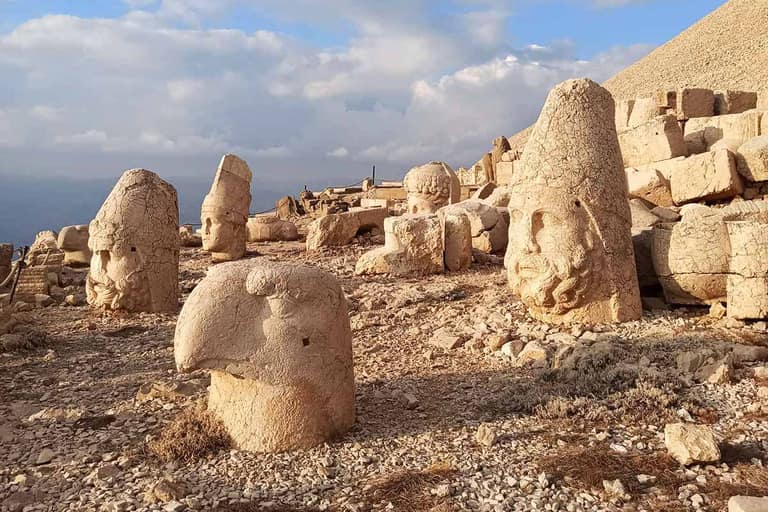
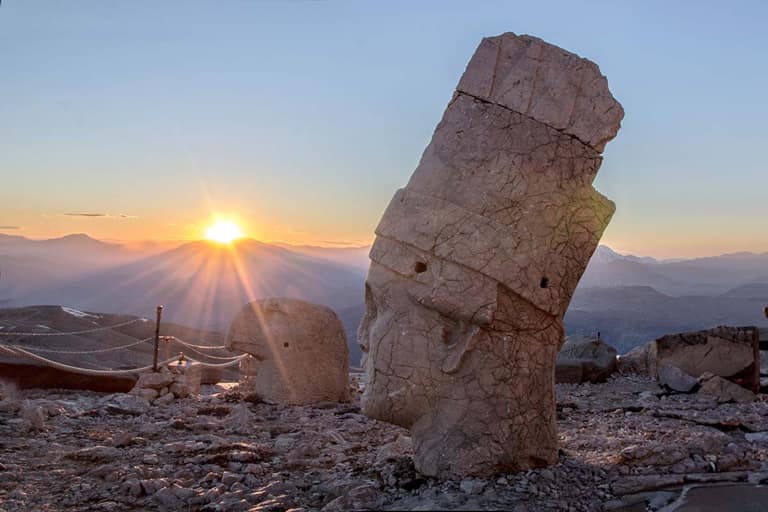
Time and earthquakes did the rest. The colossal heads broke from their bodies and tumbled to the ground, and that accident is what gives the place its strange power. The faces, roughly two metres tall, now sit upright in the dirt beside their empty thrones, lined up and looking out across the valleys with the same calm expression they have worn for twenty centuries. Rising behind them is a 50-metre cone of fist-sized stones, the tumulus, almost certainly built to cover the king's burial chamber. Generations of archaeologists have probed it without success, so the tomb itself remains unfound and the summit keeps its mystery.
UNESCO recognised all this in 1987, and you'll often hear Nemrut called the eighth wonder of the world. It earns the nickname most convincingly in the first few minutes of daylight.
The decision that shapes everything: sunrise or sunset
Before anything else, settle on your hour, because it determines the entire shape of your day. The summit has two terraces of statues facing opposite directions, and they reward opposite moments.
The East Terrace holds the most complete figures and is the classic perch for sunrise. You drive up while it's still dark, walk the final slope by torchlight, and watch the gods materialise as the sky lightens behind them. It's the more theatrical of the two experiences, and the busiest, particularly in peak summer.
The West Terrace has the better-preserved heads and faces the sunset, so the stone warms to amber as the day fades and the crowds drift away. The catch is that you make the climb in the afternoon heat rather than the dawn chill.
If the postcard image and the early-morning ritual appeal, choose sunrise. If a pre-dawn alarm sounds miserable, sunset is kinder on the schedule and no less beautiful. Both share one entrance and the same short uphill walk of 20 to 40 minutes, so good shoes and an unhurried pace go a long way at this altitude.
Picking your base: Kahta, Şanlıurfa or Gaziantep
The mountain is genuinely remote, with no bus to the top, so a guided tour or private driver who knows the dark switchbacks is the sensible way in. Where you set off from changes the rhythm of the trip.
Adıyaman and Kahta: the closest start
Adıyaman is the nearest city, complete with its own airport, and the small town of Kahta sits closer still, about an hour below the peak. From here the summit is roughly 85 km away, around 1.5 to 2 hours given the mountain road, which makes this the gentlest option for catching either sunrise or sunset without a punishing drive bookending your day.
Şanlıurfa: two wonders in one trip
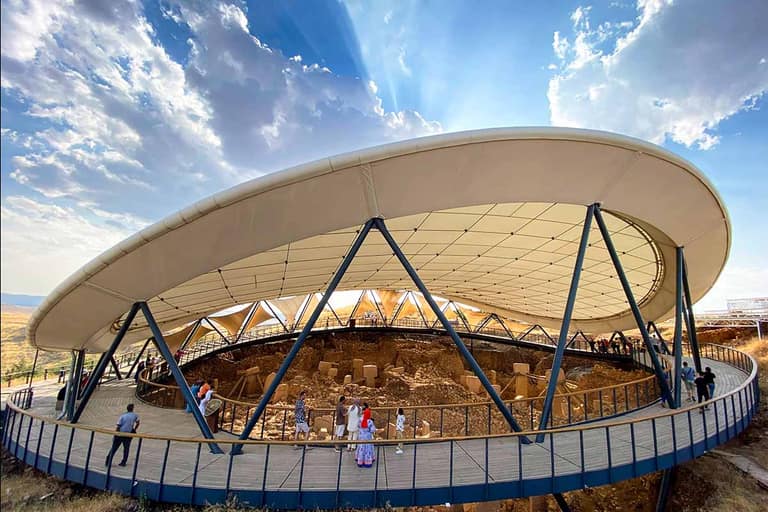
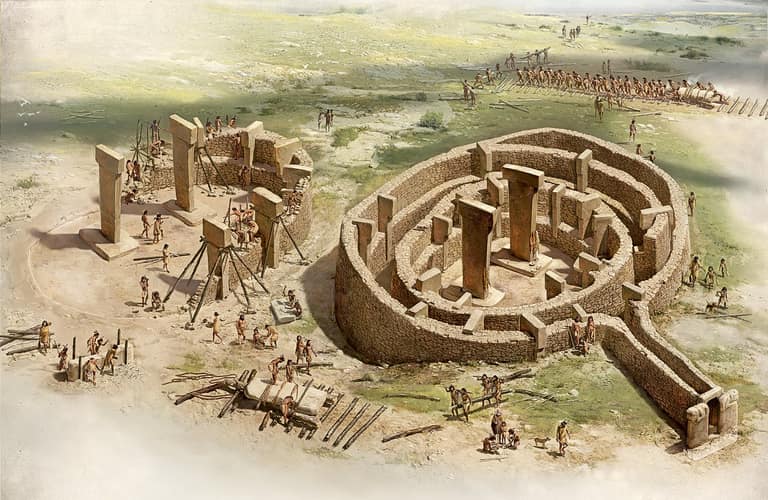
From Şanlıurfa it's about three hours to the mountain, a stretch that sounds daunting but works smoothly as a private day run timed to dawn or dusk. Urfa's trump card is its other neighbour: Göbeklitepe, the oldest known temple complex anywhere. Plenty of travelers settle in here and let the city anchor a two-day pairing of Neolithic stones and Commagene gods.
Gaziantep: history with a side of kebab
Gaziantep, Türkiye's undisputed food capital, lies about 3.5 hours from the summit. A private full-day tour spares you the rental car and the unfamiliar mountain road, and it leaves room to start or finish the day over a proper Antep breakfast or a plate of something grilled.
The Commagene road: what to see on the way up
The route to the summit threads through the old kingdom of Commagene, and the better tours pause at its surviving monuments. Sunset visitors usually catch these climbing up; sunrise visitors see them on the way back down, after breakfast.
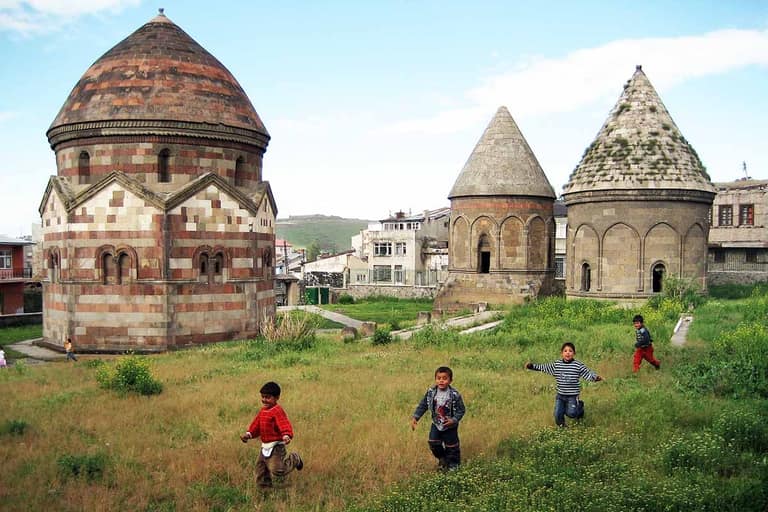
First comes the Karakuş Tumulus, a burial mound for the royal women of the dynasty, ringed by tall columns crowned with carvings of an eagle and a lion. Further along, the Cendere Bridge still vaults a river gorge on a single Roman arch, raised in honour of the emperor Septimius Severus at the end of the 2nd century AD. And at Arsameia, the dynasty's hillside seat, you'll find a celebrated relief of King Mithridates clasping hands with the god Heracles, alongside a lengthy inscription and a mysterious tunnel cut deep into the rock. String them together and a single summit becomes a half-day through the wreckage of a whole civilisation.
Turning Nemrut into a southeast adventure
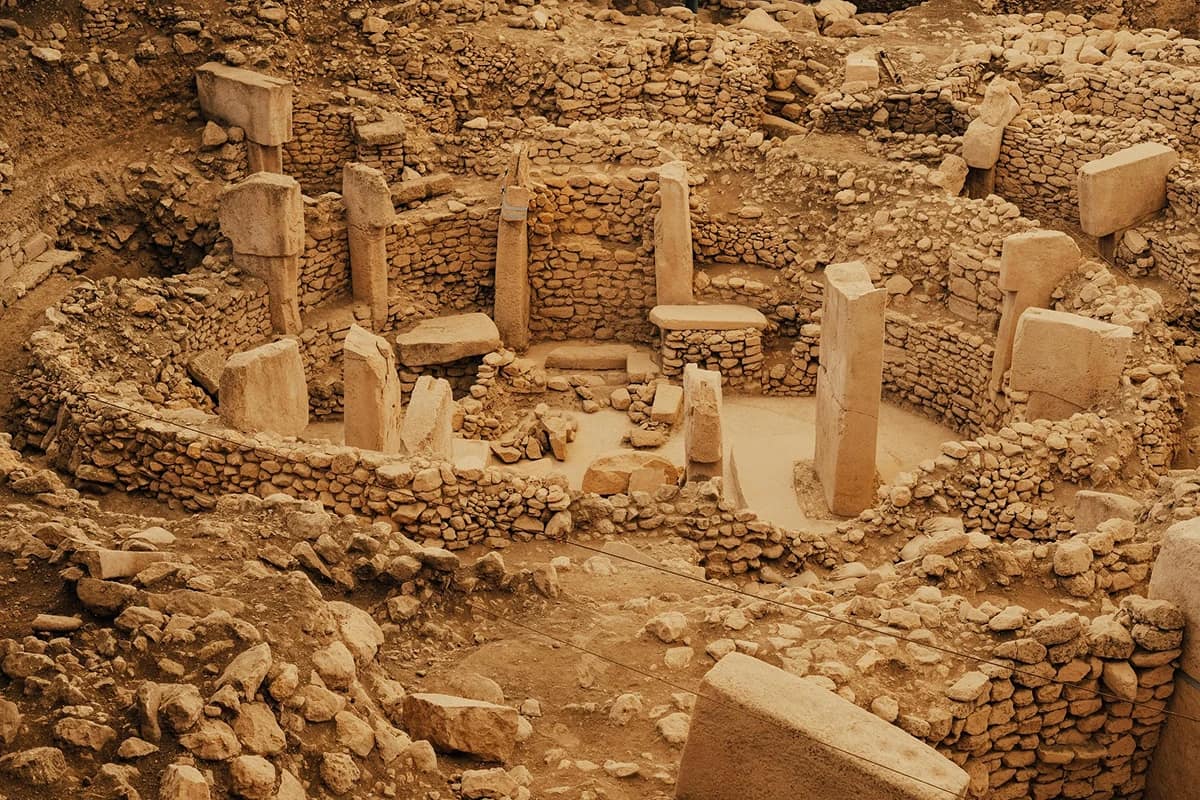
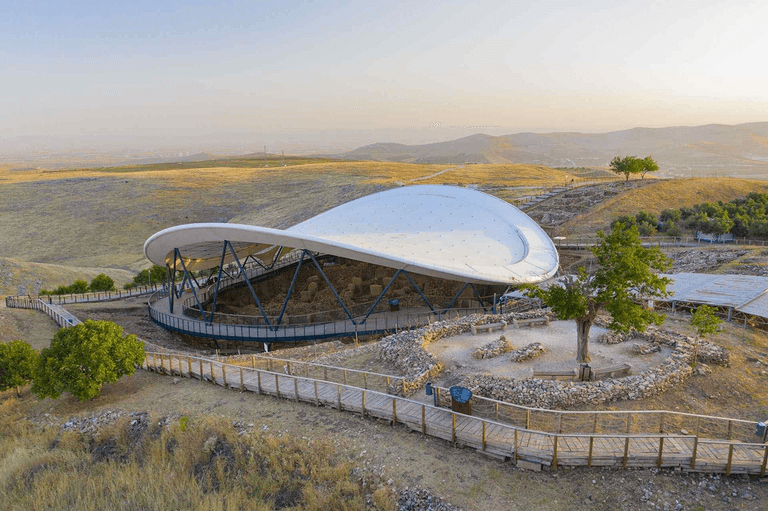
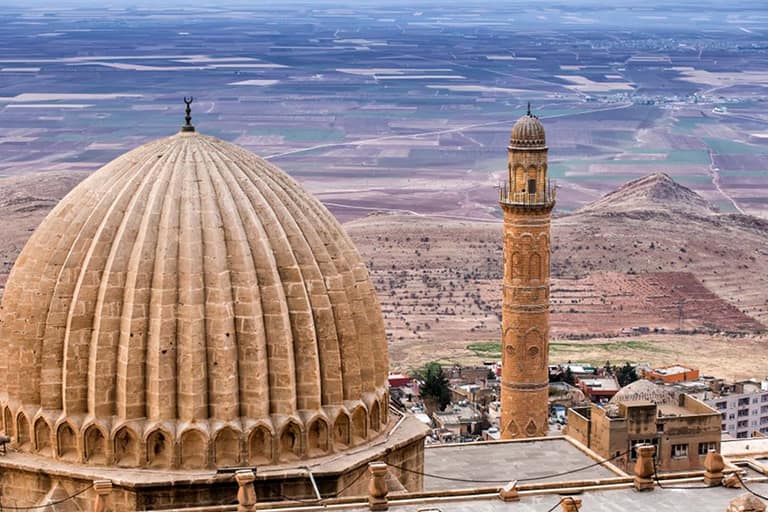
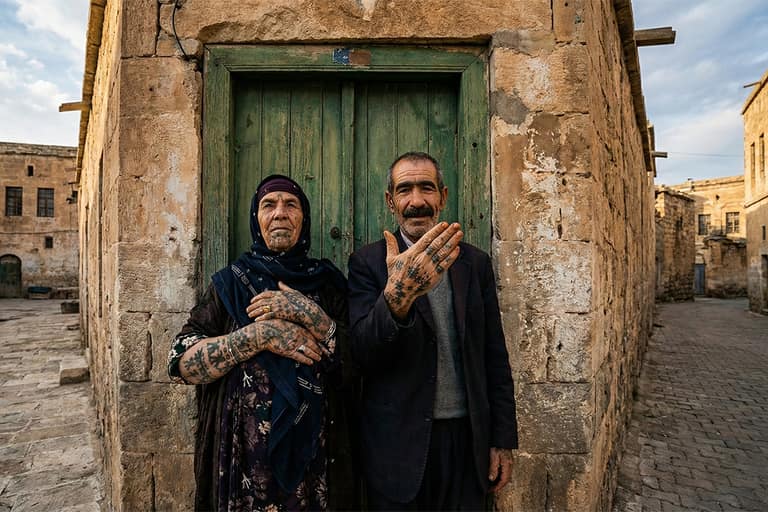
Having come all this way, it would be a shame to give the region just one morning. Nemrut's obvious partner is Göbeklitepe, raised some 11,000 years ago and the reason many people fly into Şanlıurfa to begin with. Fold in its sister site Karahantepe, the beehive-house town of Harran, the half-drowned village of Halfeti on the Euphrates, and the honey-coloured lanes of Mardin, and you've assembled one of the most rewarding cultural circuits in the country.
The tidiest way to bag both headline sights is a dedicated two-day Göbeklitepe-and-Nemrut tour, available in private form so it can flex around how you like to travel.
Let someone else drive: multi-day Eastern Türkiye tours
If assembling the logistics yourself sounds like hard work, a multi-day tour stitches Mount Nemrut into a single route alongside the other highlights of Eastern and Southeastern Türkiye. Some stay compact, looping the southeast over a few days; others run all the way north to the green Black Sea coast at Trabzon. Choose the length that suits your trip and leave the pre-dawn alarms and long drives to people who do this for a living.
Private or group: which fits your trip
These tours typically come in two flavours, and the right one depends on how you like to spend a day.
Go with a group tour if you'd rather keep things easy and economical. You travel on a scheduled departure in a shared vehicle along a planned route, which suits solo travelers, couples, and anyone content to follow a fixed timetable.
Lean toward a private tour when control matters, and at Nemrut it matters more than usual. Because the whole experience rests on one fleeting sunrise or sunset, a private trip lets you nail the exact slot, dawdle at the terraces as long as you like, and reshuffle the roadside stops to suit your group. Families and small parties tend to find it the better fit. Whichever you pick, you're travelling with people who have driven these mountain roads in the dark more times than they can count.
Practical notes: season, the climb, and what to pack
Target late spring to early autumn, broadly May to October, and you'll do best in May, June, September and October, when skies are clear and the days sit comfortably warm. July and August bring the heat and the crowds, while winter snow can shut the summit road entirely.
The detail that trips up newcomers: dawn at the top is properly cold and wind-blown even at the height of summer. Bring a warm layer, a hat and sturdy footwear regardless of the season, carry water for the walk, and pack a small torch if you're chasing sunrise, since the last stretch is unlit. After that, there's nothing left to do but wait for the light to reach the faces.
Nemrut asks something of you in return for the view, and that effort is half the point. All that's left is to choose your city, choose your hour, and let the road carry you up.